But, maybe, hopefully, it’ll be back in a different form…
When a food place closes in Northeastern Pennsylvania, people tend to react in one of two ways.
They shrug, because around here “closed” shows up as reliably as potholes. Or they turn it into a crime scene: What happened? Who screwed who? Was it money? Was it drama? Did somebody get cute with the borough?
But that’s not what this is.
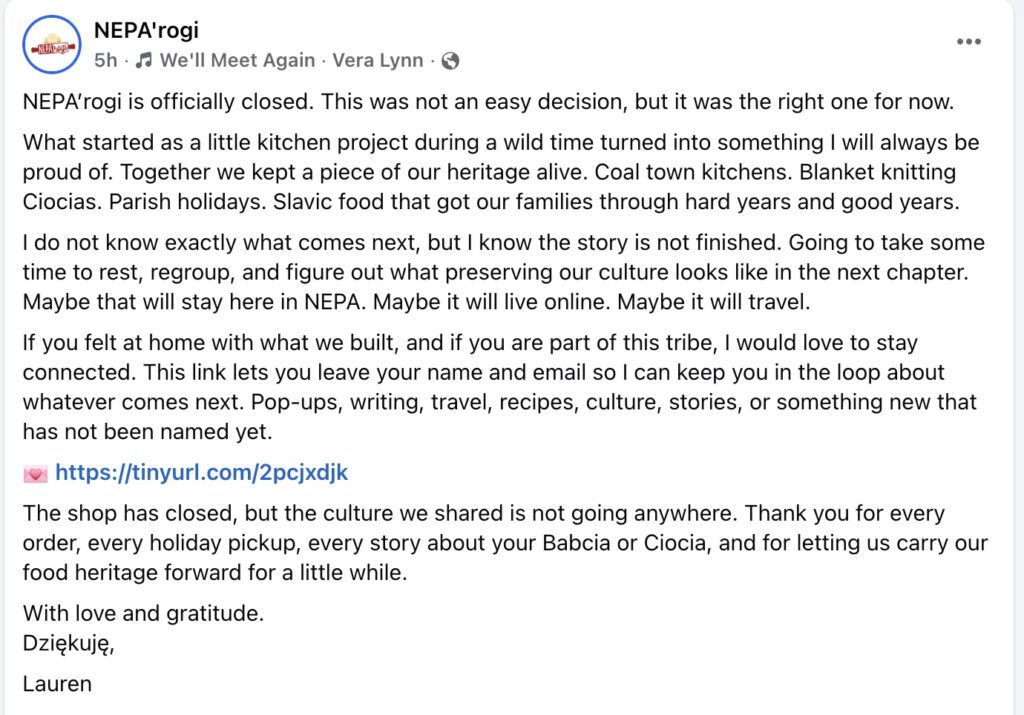
NEPA’rogi, the Nanticoke pierogi shop that took coal-region comfort food seriously and treated it like it mattered, announced it is officially closed in a public Facebook statement that reads less like a press release and more like a note someone left on the kitchen table. “This was not an easy decision,” it begins, “but it was the right one for now.” It doesn’t plead. It doesn’t posture. It just tells the truth the way people tend to tell the truth around here: plainly, with feeling, and with a little bit of hard-earned dignity.
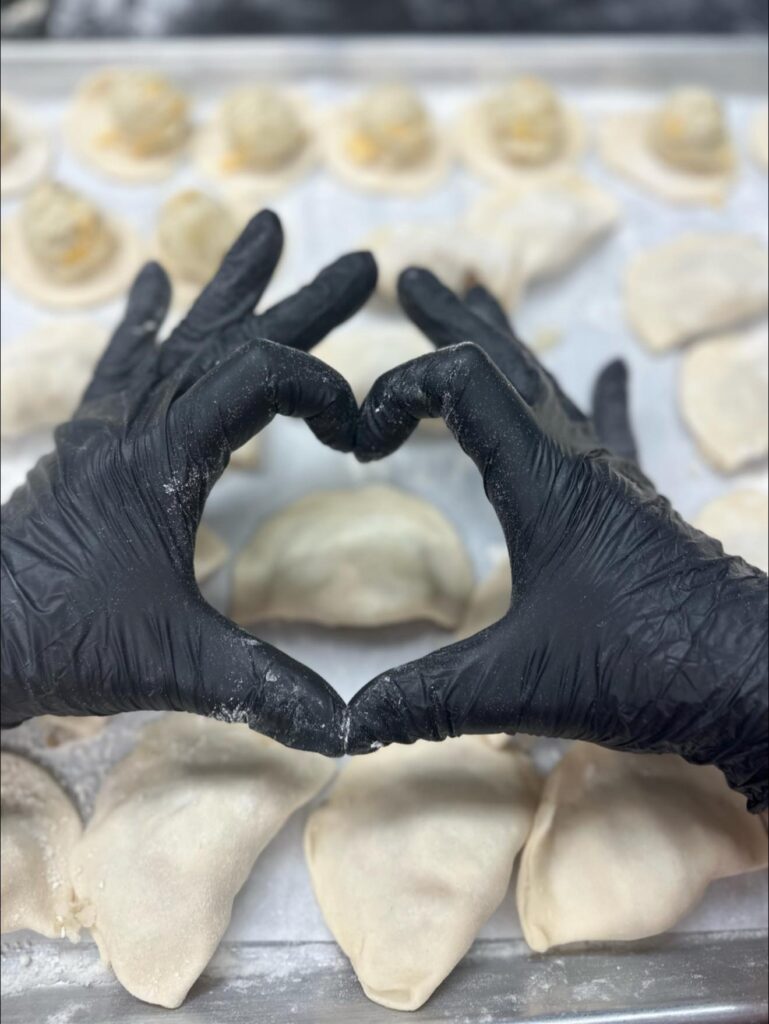
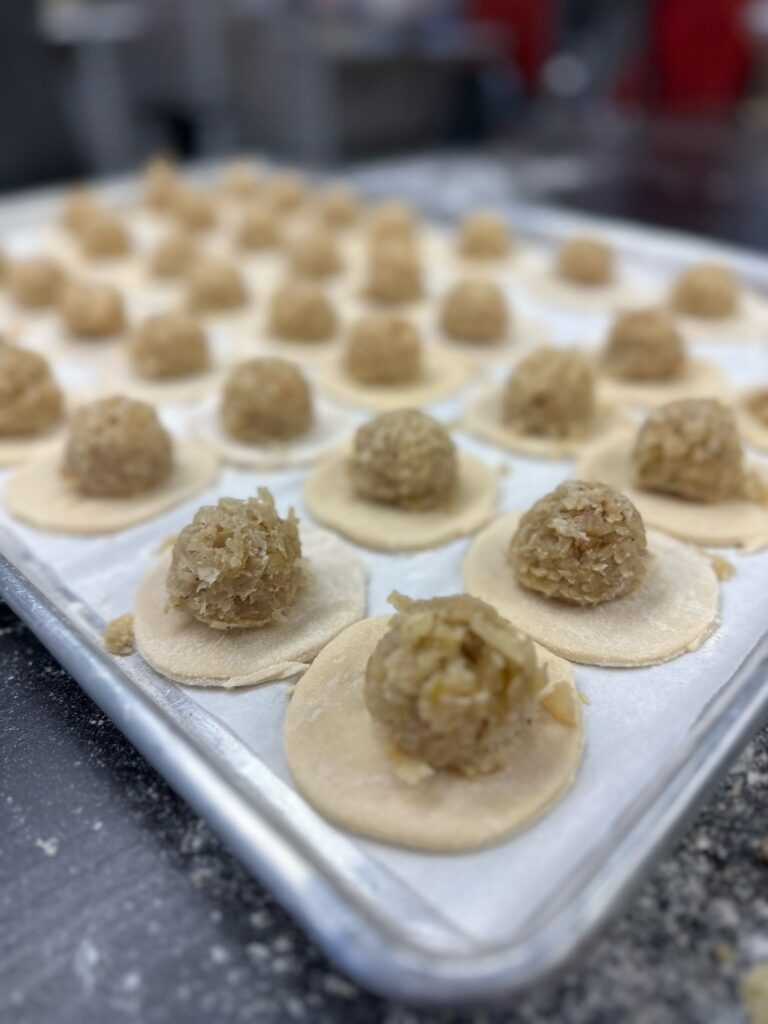
NEPA’rogi operated out of 164 S. Market St. in Nanticoke, Luzerne County, a small-town address that somehow became a destination. Not because it was trendy. Not because it was trying to be anything other than what it was. But because the product was real: handmade pierogi, hand-pinched, built from fresh dough and patience. Nothing mass-produced. Nothing “close enough.” Just the kind of food that’s been holding families together in this region for generations, quietly, stubbornly, one batch at a time.
And NEPA’rogi never hid what it was about.
In the closing statement, founder Lauren Gorney framed the whole thing as bigger than a menu or a storefront. She wrote about coal town kitchens, parish holidays, and Slavic food that carried people through hard years and good ones. She referenced “blanket knitting Ciocias”, the kind of detail you don’t drop unless you’ve lived it. This wasn’t branding. This was identity.
If you’re looking for the neat, clean explanation that business reporters love, rent went up, costs went up, people stopped coming, you won’t find it here. And you shouldn’t invent one.
In a Facebook video posted Jan. 22, Gorney offered the real reason, the honest one: life changed. Good changes. But changes all the same. And NEPA’rogi, in its current form, no longer fit the chapter she was in. She talked about the strain of staying ahead of demand while still meeting the level of customer care she expected from herself, the kind people came to count on. That’s the part nobody wants to talk about when they romanticize “small business grit.” The exhaustion. The hours. The constant pressure to be perfect for a crowd that always wants more.
And NEPA’rogi had a crowd.
Because NEPA’rogi was popular. Painfully popular.
You can see it in the operational posts, especially around the holidays, when the ordering system starts to look less like a modern business and more like a triage unit: voicemails, texts, updates, delays, apologies, and promises that they would “call EVERYONE back individually.” Frozen pierogi availability updates. Cutoffs. Eventually, the only sentence that makes sense when you’re running out of runway: “No longer taking holiday orders.”
That isn’t a failure. That’s what happens when a small operation hits the ceiling of what the humans inside it can physically do.
NEPA’rogi started during the pandemic-era surge of local entrepreneurship, the wave of 2020 businesses that were born out of job loss, uncertainty, and the sudden realization that the old plan wasn’t coming back. Keystone Newsroom reported in 2021 that Gorney lost her job during the pandemic, and what followed began as a small kitchen project in a strange time. Like so many of the best things, it wasn’t launched with a master strategy. It started because it had to.
But it grew fast.
By late 2020, pierogi sales and fundraising helped push the operation into bigger plans. A food truck followed in April 2021. Then came the brick-and-mortar location in Nanticoke, opening around September 2021. Keystone’s reporting described a staff of around 10 “pinchers,” turning out thousands of pierogi weekly, with fresh dough made daily.
Read that again. Thousands weekly. Fresh dough daily.
In a region where “good enough” gets sold as tradition, NEPA’rogi built its reputation on doing the hard thing, over and over again, because that was the whole point.
And it worked.
The menu carried the classics, potato & cheddar, farmer’s cheese, potato & onion, but also rotated flavors and limited runs that kept things interesting without turning pierogi into a gimmick. This wasn’t “fusion for the algorithm.” It was tradition with enough confidence to stretch its legs a little.
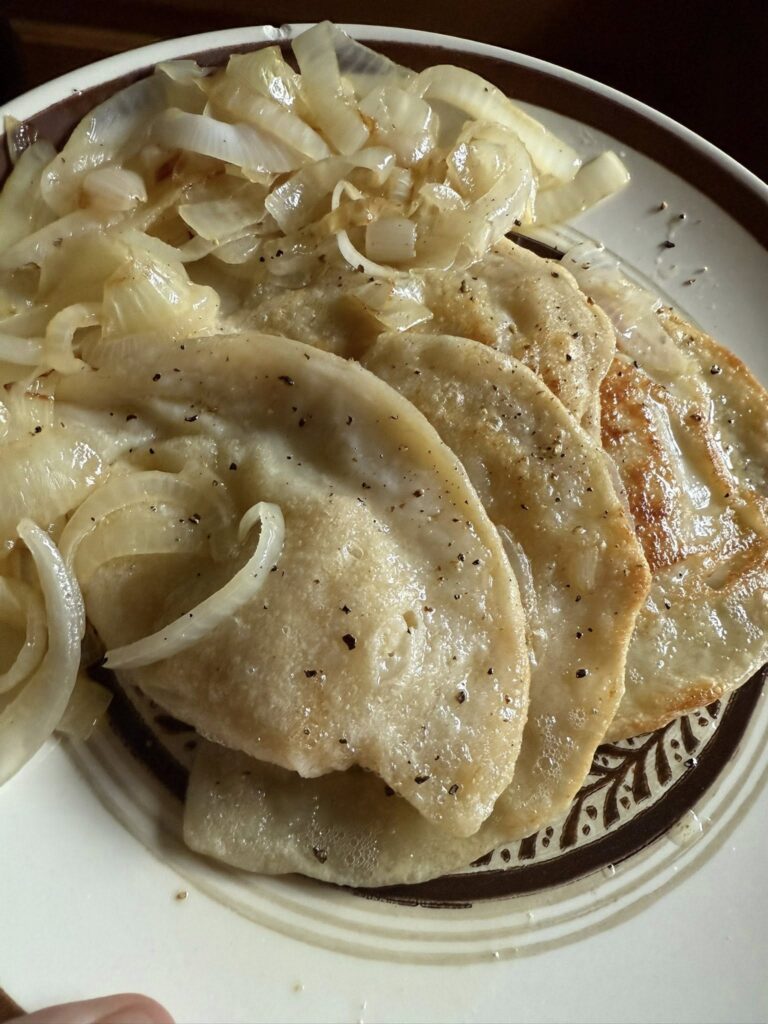
And it was priced like what it was: not freezer food, not bar-app filler, but handmade labor. A December 2025 post listed potato & cheddar at $11, potato & Cooper at $12, farmer’s cheese at $16, numbers that quietly explain everything. Somebody made these. Somebody stood there and pinched each one shut.
The reviews back up the reputation. NEPA’rogi held a 4.4-star rating across 75 Google reviews, with customers consistently praising the pierogi as homemade, fresh, and noticeably different from commercial brands. One reviewer singled out the pierogi as “thicker and doughier,” which sounds like a small detail, until you realize it’s actually the entire story. That texture isn’t a mistake. It’s the point. It’s what pierogi taste like when they’re made by hands instead of factories.
And then there’s the compliment that matters more than any star rating: people traveled for it.
One reviewer said they lived in Baltimore but visited the area once or twice a year, and ordered dozens to take home. That’s not casual approval. That’s loyalty. That’s food doing what it’s supposed to do: connecting people to a place they may not even live in anymore.
Of course, not every review was glowing. Some people complained about inventory issues, confusion around ordering, or occasional rough edges in service. But that’s not scandal. That’s strain. Those are the symptoms you see when demand outruns capacity, when a place becomes so wanted it starts to buckle under its own success.
The real loss here isn’t simply that a storefront went dark.
NEPA has plenty of places to eat. Diners. Bars. Pizza joints. Solid ones. But what’s rarer, what NEPA’rogi pulled off, is a specialty food business built around cultural identity. A place that didn’t just sell food, but protected something: a heritage that doesn’t always get treated with respect outside of family kitchens, parish basements, and holiday tables.
And the closing statement makes one thing clear: this isn’t an ending in the clean, final sense.
Gorney wrote: “I do not know exactly what comes next… Maybe it will stay here in NEPA. Maybe it will live online. Maybe it will travel.” She hinted at pop-ups, writing, travel, recipes, culture, stories, or “something new that has not been named yet.”
That line lands because it’s real. Because food doesn’t stop when the shop closes. It just changes shape. It moves. It goes quiet for a while. It waits for the next chapter.
NEPA’rogi is officially closed. But the story, like she said, isn’t finished. The culture isn’t going anywhere. It’s still here in the coal-region air, in the parish halls, in the holiday kitchens, in the family recipes remembered by hands more than by words.
And for now, the last thing left on the table is the simplest goodbye possible:
With love and gratitude.
Dziękuję.