This Northumberland County bistro deserves all of our attention…
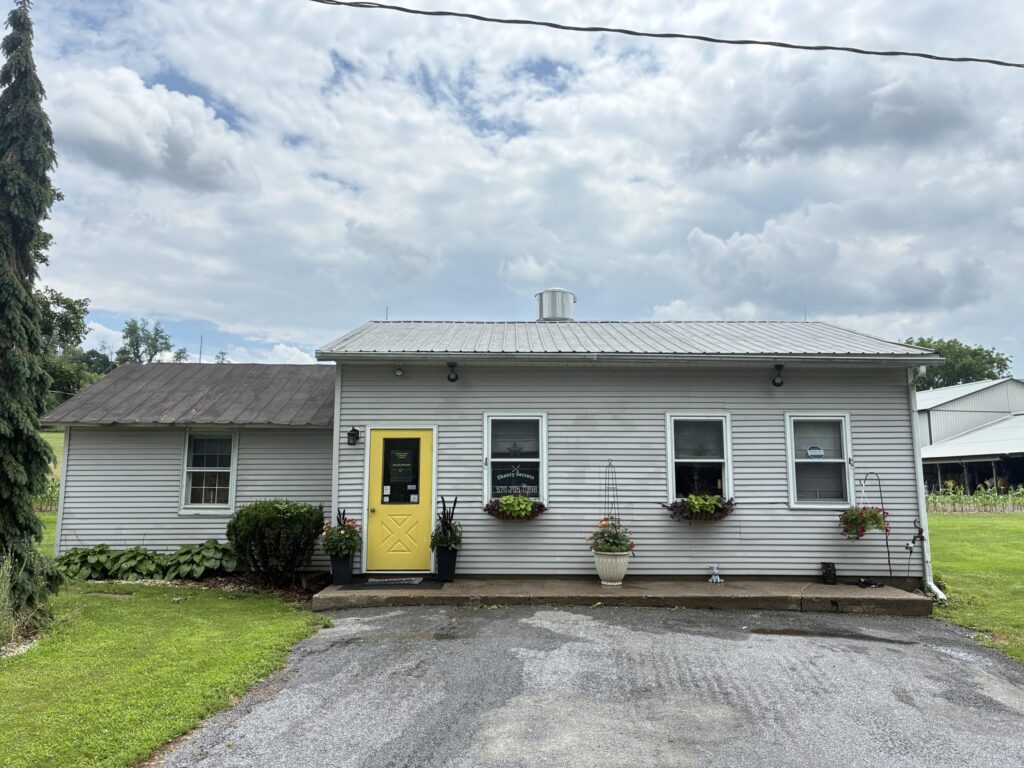
On paper, Shanty Secrets (Danville, PA) is easy to describe: a reservation-only weekend bistro outside Danville that also runs a recreational cooking school, a weekly meal-prep program, and periodic “Lite Fare” menus.
But that tidy description misses what makes the place worth talking about, because Shanty Secrets isn’t operating like a typical restaurant.
It’s closer to a curated dinner experience than a standard night out. You don’t stumble into it. You plan for it. You go because you want the kind of meal that feels deliberate from the first course to the last, and because places like this don’t turn up every day in rural Pennsylvania.
A bistro built for small rooms and long dinners…
Shanty Secrets runs on a premise that’s becoming rare: keep it small, do it carefully, and let demand take care of itself. Capacity stays limited by design. When dinners are announced, they tend to sell out fast.
That isn’t hype, it’s the business model.
This isn’t a two-turn seating situation where the staff is trying to keep the clock moving. Dinner is paced. It’s a multi-course experience that gives the kitchen room to cook and guests room to settle in. The result feels less like dining out and more like being hosted.
The menus reflect that structure. Across multiple prix-fixe formats, Shanty Secrets often follows a familiar rhythm: amuse bouche, soup or salad, sorbet, entrée options, a side, dessert. It’s not just “more courses.” It’s a meal designed to unfold.
The food: familiar comfort, smart twists…
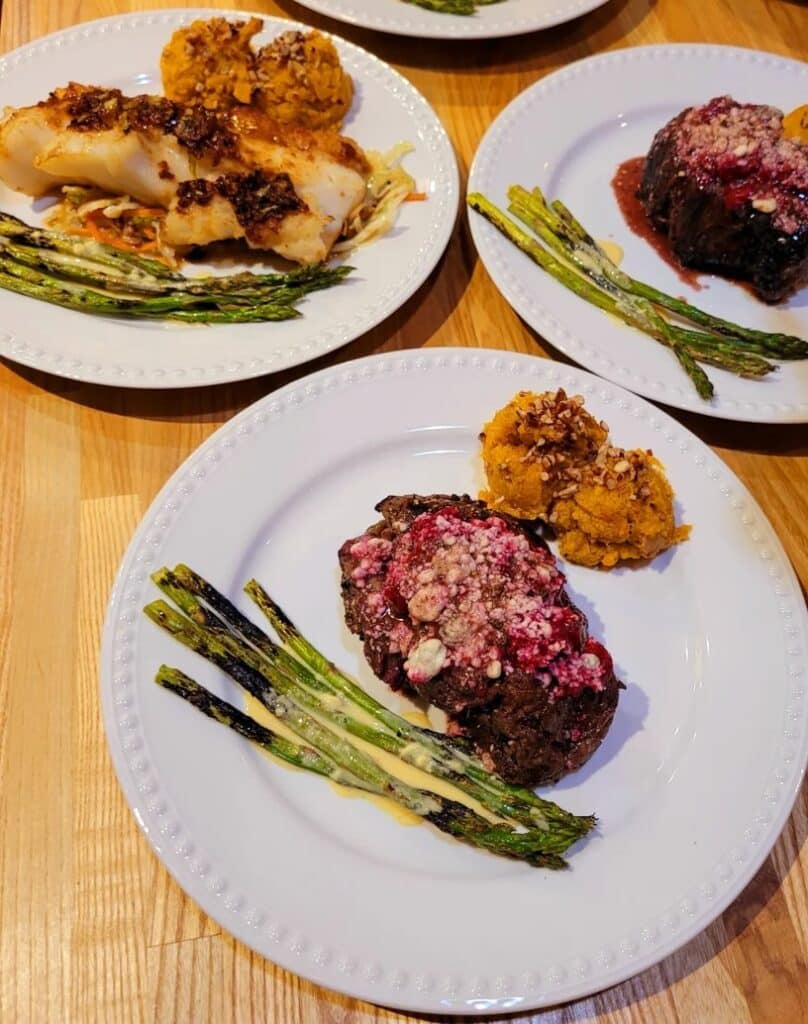
Shanty Secrets is owned by Chef Kristian Adams. His food has an identifiable signature: classic formats, well executed, with touches that keep things interesting. You’ll see plenty of familiar anchors, filet, chicken, seafood, pasta, and the menus don’t try to reinvent dinner for the sake of it.
But there’s also a steady thread of brightness running through the cooking, often through fruit or acidic contrast. A filet might show up with a blueberry sauce or glaze. A salad may lean into grilled peach and feta. A sauce might move toward peach-mango. Even something like blueberry gazpacho can appear, not as a gimmick but as a real dish with intent.
That approach works because the kitchen doesn’t overplay it. The twists are there to make the familiar feel sharper, not to show off.
Even the comfort classics read the same way. Shrimp scampi. Steak Diane. Spinach lemon & orzo soup. Minestrone. These aren’t filler. They’re stabilizers, dishes that tell diners they’re in good hands, even when the menu veers into more playful territory.
The Grand Chef’s Table: the heart of the room…
If there’s one part of Shanty Secrets that defines the experience, it’s the Grand Chef’s Table—a six-seat high-top bar where diners are positioned right in front of the cooking.
This isn’t a distant “open kitchen” vibe. It’s close. You can see the timing. Smell the sauces. Watch the last-minute decisions: a sear, a finish, a garnish, a shift in pace. It changes the energy in the room. Dinner becomes less passive.
And it makes sense in a place like this. Shanty Secrets doesn’t lean on spectacle, but it does understand that proximity creates connection. Guests don’t just eat the food—they see how it comes together.
The dining room supports that feeling. Dark linens, candlelight, gold chargers, neatly folded napkins. It’s intimate without feeling stiff. The space reads more like a small private dinner than a public restaurant floor.
The cooking school isn’t an add-on, it’s core to what they do…
A lot of restaurants host the occasional event or class.
Shanty Secrets builds them into the identity.
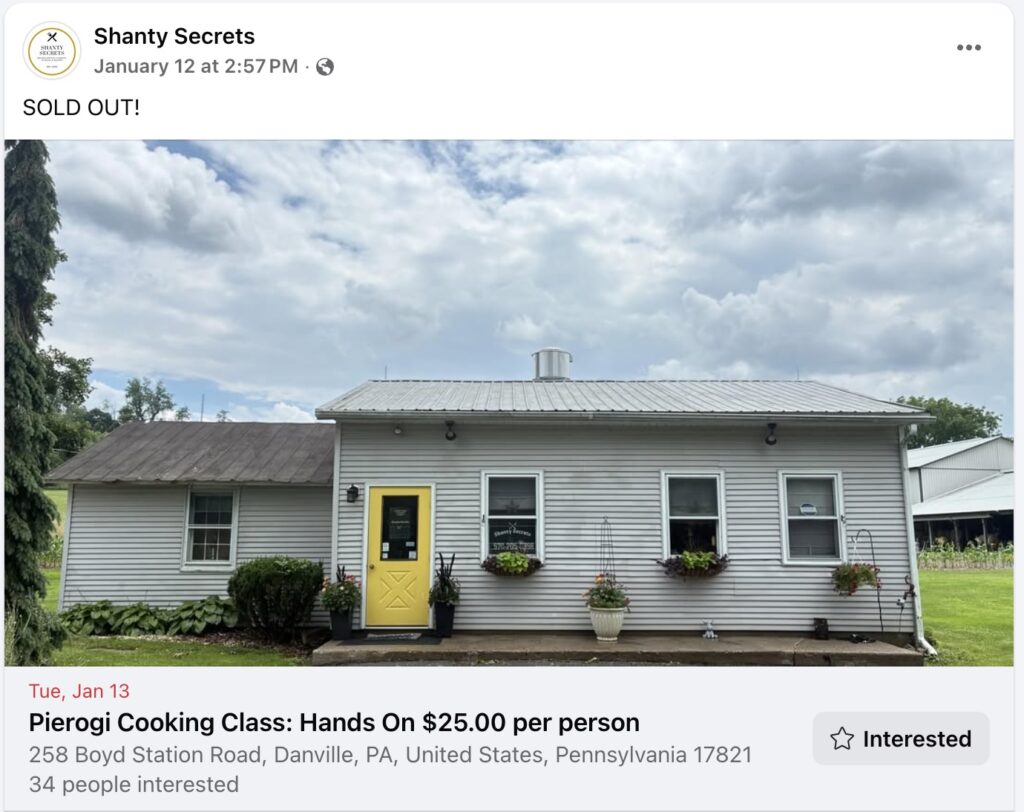
The recreational cooking school offers hands-on classes, pizza, pasta, pierogies, and more, typically with limited capacity. They also run formats like “Dine and Demo,” where a small group watches Adams cook dinner at the chef’s table and then eats what’s made.
This matters because it explains the through-line: Shanty Secrets doesn’t just cook for people. It includes them. It’s built to teach and host, not just serve and turn tables.
And that mindset shows up everywhere, from how the dinners are structured to how the room is set.
Meal prep and Lite Fare: the practical backbone…
Shanty Secrets earns its reputation on weekend dining, but what makes the business especially interesting is how much of it is supported by repeatable weekday offerings.
The weekly meal-prep program is positioned as a real-life solution: weekly menus, set ordering windows, pick-up schedules that vary. It’s not glamorous. It’s useful. And it helps turn Shanty Secrets into something people can count on, not just something they treat like a special occasion.
Then there’s the “Lite Fare Wednesday” side, more casual, priced like a simple lunch menu, and designed for everyday appetite. Salads and bowls. Chickpea salad sandwiches. BBQ sandwiches. Meatballs. Chicken fingers and fries. A handful of vegan options that feel fully thought-out rather than token.
And yes, the “Sloppy Joseph.” It’s a tongue-in-cheek nod to the sloppy joe (or, around here, the whimpie), updated in a chef-driven way without losing the point of the original. It’s a reminder that a place can take food seriously without taking itself too seriously.
This is where Shanty Secrets becomes something rarer than a “hidden gem.” It’s running two different kinds of food lives out of one kitchen: destination dining and real-world support.
Why it works for Danville by not being downtown…
Downtown Danville has its own food rhythm: walkable streets, visitors, Geisinger professionals, steady traffic.
Shanty Secrets doesn’t compete with that. It offers something downtown can’t easily replicate: quiet, controlled intimacy, and a dining experience that feels like you’ve gone somewhere, even if you haven’t driven far.
It’s not convenient. That’s part of the point.
Shanty Secrets stays small on purpose. It sells out because it doesn’t scale like a typical restaurant, and because the appeal is tied directly to the limitation. The scarcity isn’t a gimmick. It’s how they protect the experience.
Shanty Secrets isn’t special because it’s hidden.
It’s special because it’s intentional: a countryside kitchen with a chef’s creativity, a host’s touch, and a clear understanding of what people actually want, whether that’s a paced, multi-course night out, a hands-on class, or a meal that saves them from another week of fast food and frustration.