The historic and much-beloved restaurant has been sold. Will the magic that made it so special survive?
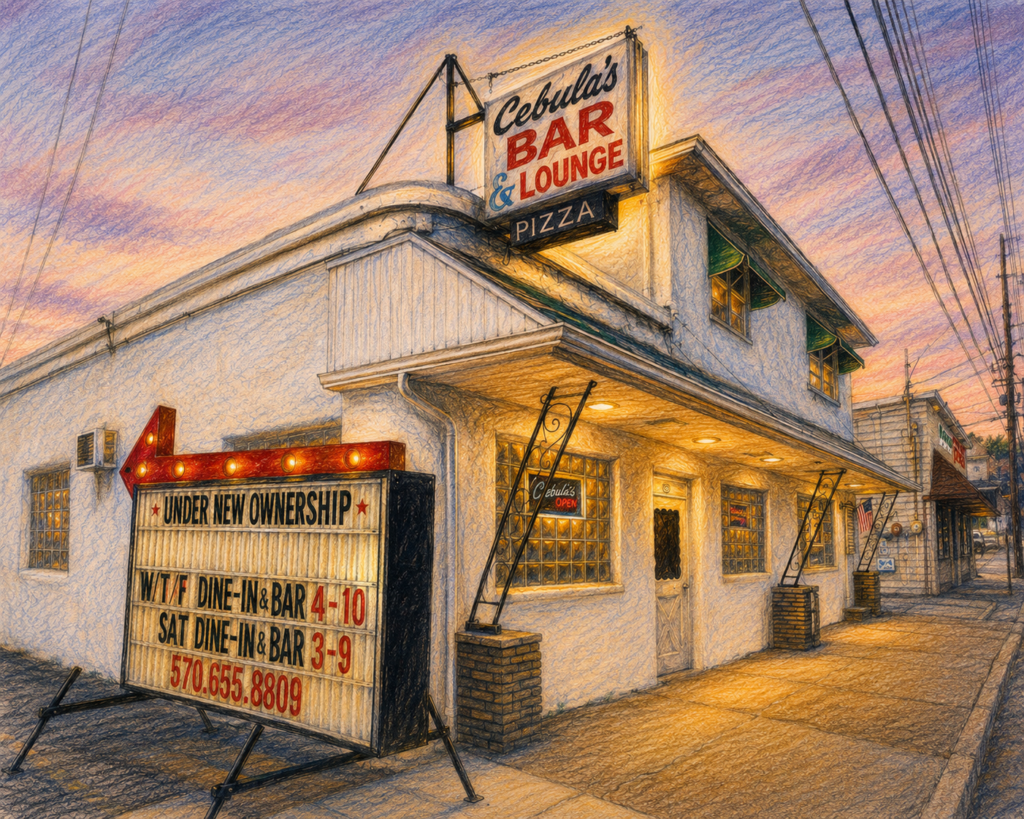
There are restaurants, and then there are places that become part of the local operating system.
Cebula’s Pizza & Bar in Dupont is one of those places.
Now, after another ownership transition, one of Northeastern Pennsylvania’s most recognizable pizza institutions is entering a new chapter.
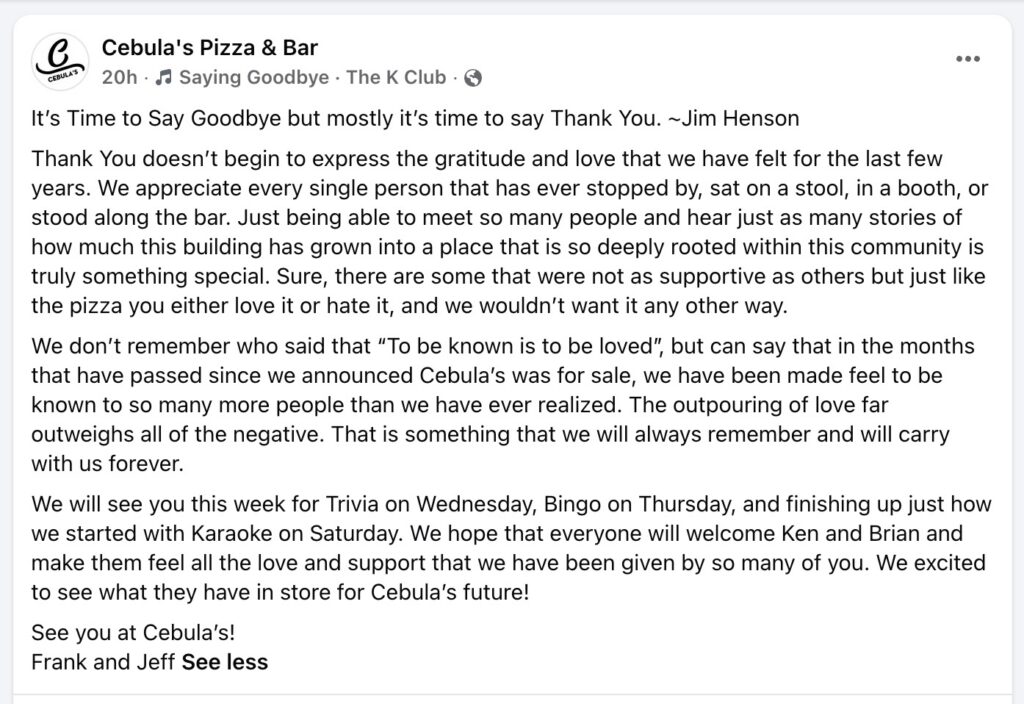
In a farewell message posted to Facebook, outgoing owners Frank Andrews and Jeff Romanecz thanked the customers who filled the booths, occupied the barstools, showed up for trivia nights, bingo, and karaoke, and supported the restaurant through its latest era. The pair also introduced the community to Cebula’s new owners, Ken and Brian, asking customers to extend the same support and loyalty they had received.
For most restaurants, that would be the story. For Cebula’s, it’s only the beginning. Because when you buy Cebula’s, you’re not buying a pizza shop. You’re inheriting a piece of Dupont.
The story begins in 1939, when the family behind Cebula’s opened a neighborhood tavern that would eventually become one of the region’s most distinctive pizza destinations. According to a feature produced by WVIA, the pizza itself traces back to a family trip to the 1939 World’s Fair in New York.
Maureen Cebula recalled that her grandmother watched pizza being made and came home convinced she could do it herself.
There was one problem. She didn’t have round pizza pans. She had cookie sheets. So she made square pizza.
She developed her own dough. Her own sauce. Her own approach to cheese. What emerged wasn’t New York pizza. It wasn’t Old Forge pizza. It wasn’t quite anything anybody else was making.
It became Cebula’s.
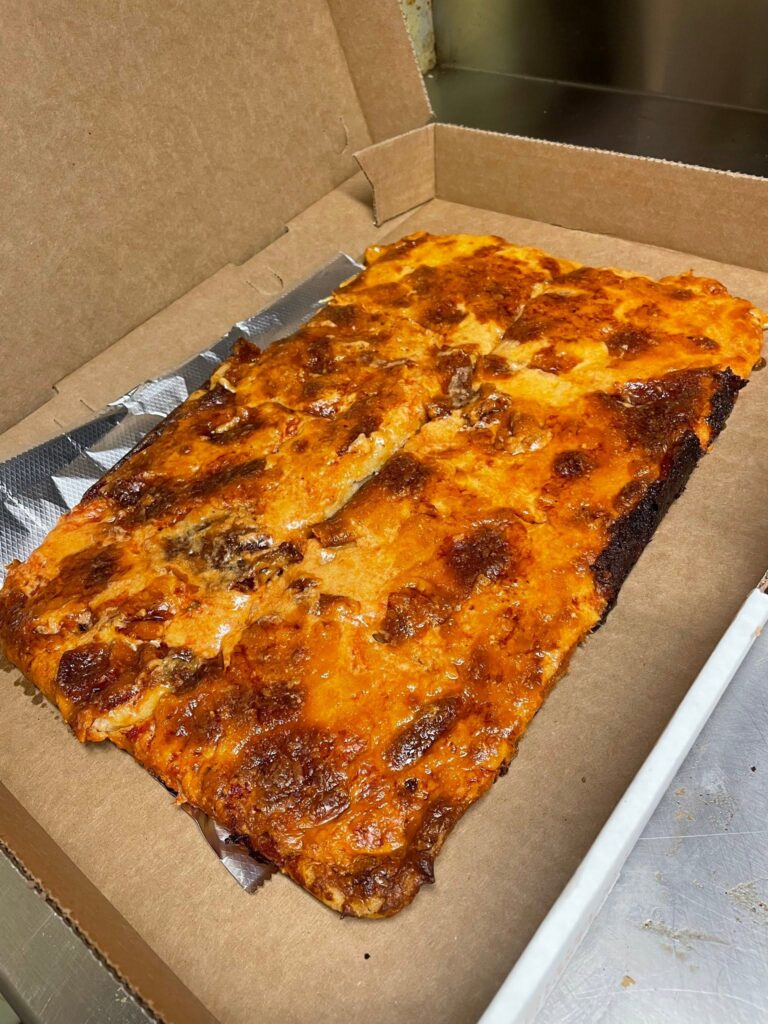
Photo credit: Cebula’s Facebook page
And over the decades, the restaurant became a true family operation. Sisters worked beside sisters. Aunts worked beside nieces. One family member remained on the job until she was 93 years old. The business survived wars, recessions, changing tastes, and changing generations while somehow remaining stubbornly, unmistakably itself.
That consistency is part of what makes Cebula’s so unusual.
The other part is the pizza.
Trying to describe Cebula’s pizza to someone who has never had it is a little like explaining coal-region culture to somebody from somewhere else. The words only get you so far.
It’s square-cut. Thick but not heavy. Built on homemade dough. Loaded with cheese. Light on sauce. Often ordered well done so the top develops those browned, blistered patches locals practically fight over.
More importantly, it occupies its own category. When reviewing Cebula’s several years ago, the NEPA Pizza Review declared it as the most unique pizza in the world.
Either you love it or you hate it. The restaurant’s own farewell message echoed that same sentiment. Like the pizza, they wrote, you either love it or hate it. That kind of devotion doesn’t happen by accident.
It happens because generations of people grew up eating it.
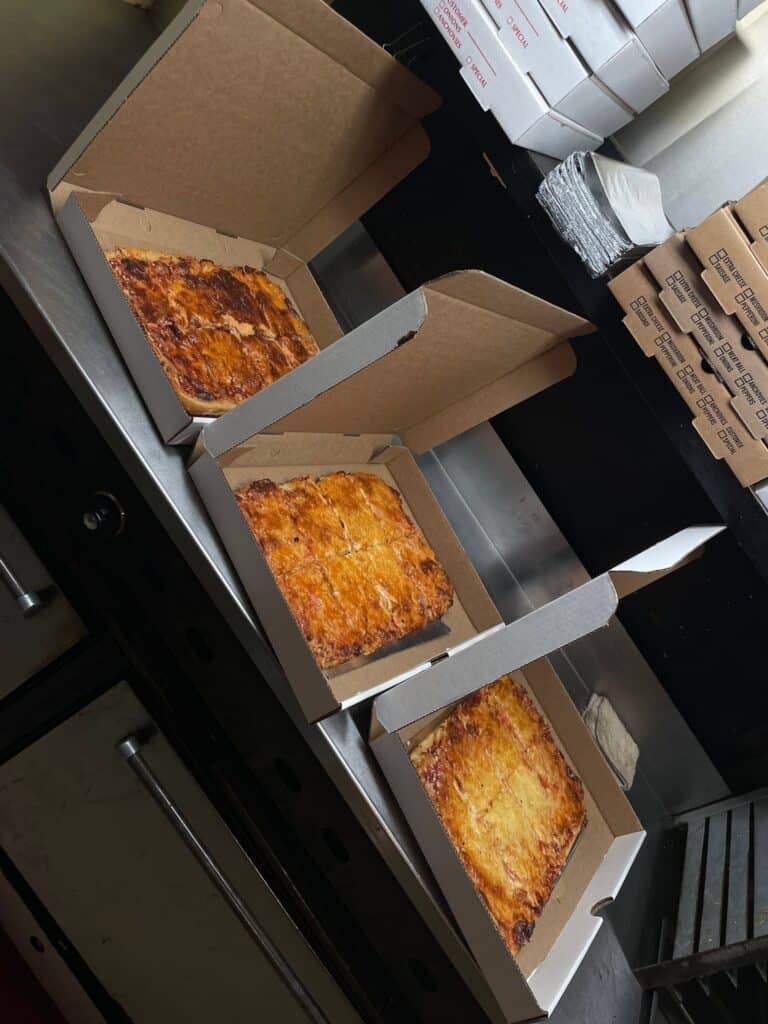
Because trays showed up at birthday parties, funerals, little league celebrations, and Friday nights at the bar.
Because people moved away and still made a stop at Cebula’s one of their first priorities when they came home.
Because in a region where pizza is practically a religion, Cebula’s managed to create its own denomination.
The pizza itself only deepens the mythology.
For years, customers have speculated about the recipe. Potato dough. Sour cream. Cream cheese. Pre-made shells shipped in from somewhere else. Every theory imaginable has circulated through bars and family gatherings.
According to Romanecz, most of them are wrong.
The recipe remains a closely guarded secret. During WVIA’s visit, he joked that only two people fully knew how to make the pizza because much of the recipe was never written down.
That mystery has become part of the appeal. So has the imperfection.
Romanecz once described Cebula’s as “the most consistently inconsistent pizza” around.
Every tray is rolled by hand.
One might be slightly cheesier. Another slightly thinner. One might come out darker, another fluffier. No two trays are exactly alike.
Yet somehow, every tray still tastes like Cebula’s.
In an age when chain restaurants spend millions trying to eliminate variation, that kind of inconsistency feels almost radical.
It’s proof that human hands are still involved.
That may also explain why ownership changes create so much anxiety.
When Andrews and Romanecz purchased the restaurant, they weren’t trying to reinvent it. They bought the business, the building, the liquor license, and, perhaps most importantly, the recipe itself. They worked to preserve what generations of customers expected to find when they walked through the door.
The same challenge now belongs to Ken and Brian.
And it isn’t a simple one.
The danger facing old restaurants isn’t usually dramatic failure. More often it’s a thousand small decisions that slowly sand away what made the place special in the first place.
A different cheese. A different dough. A different atmosphere. A different idea of what success looks like.
The customers of Cebula’s have never wanted that.
What they want is what they’ve always wanted: the same pizza, the same room, the same familiar faces, and the same feeling they get when they walk through the door.
The good news is that Andrews and Romanecz seemed to understand exactly what they were handing over.
Their farewell wasn’t filled with corporate language or grand promises. It was gratitude. Gratitude for the people who sat at the bar. Gratitude for the stories. Gratitude for the support.
And perhaps most importantly, confidence that Cebula’s future remains in good hands.
For Ken and Brian, the task ahead is deceptively simple.
Protect the recipe. Protect the culture. Protect the weirdness. Keep the pizza tasting like Cebula’s. If they can do that, Dupont will keep doing what it has done for generations.
Showing up. Ordering a tray. Arguing about whether this one is better than the last one. And coming back again next week.