The upscale Italian eatery had been open for less than a year…

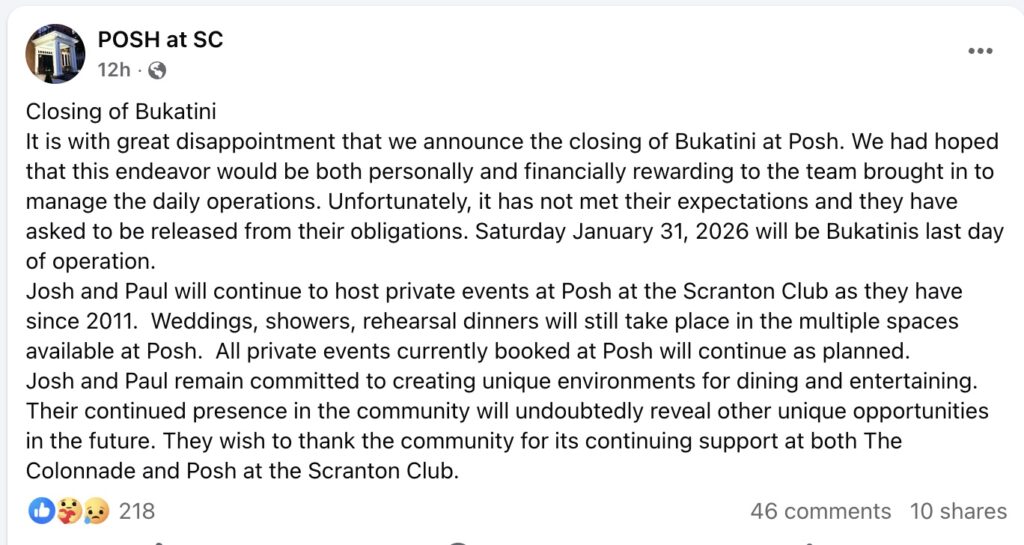
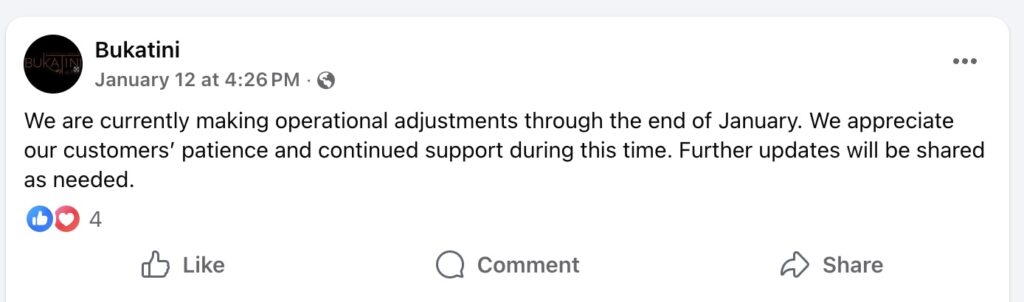
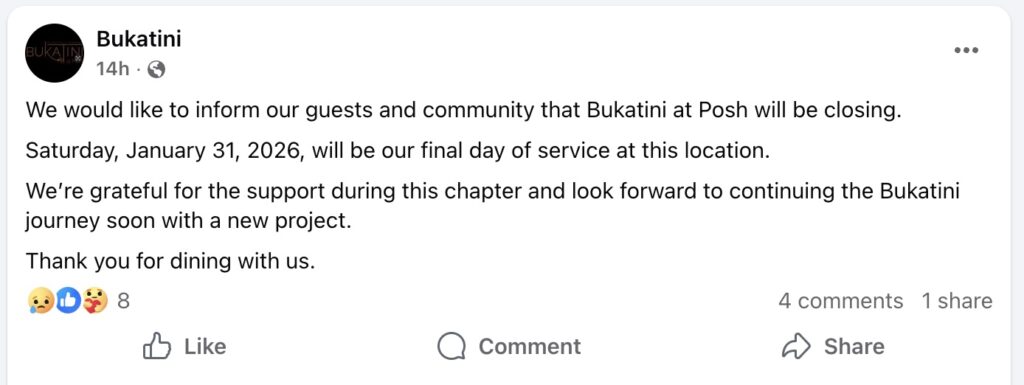
The news didn’t arrive with foreshadowing. It appeared mid-scroll, plainly stated, the kind of announcement you read twice because you assume you’ve missed context the first time. Bukatini at POSH (Scranton, PA) will close at the end of the month, its final service scheduled for Saturday, January 31. For a restaurant that had only been open since July, the announcement landed abruptly, less a gradual fade than a hard cut, immediately drawing hundreds of reactions from diners who had only just begun to fold it into their routines.
The message, posted by POSH at the Scranton Club, was careful in its wording. It emphasized continuity rather than collapse. POSH will remain open as a private-events venue. Weddings, showers, rehearsal dinners, and long-booked celebrations will continue as planned. The team brought in to manage Bukatini’s daily operations asked to be released from their agreement, and the partnership has concluded. Everything about the statement was composed, measured, and forward-looking. And yet the response made clear that this was not just another restaurant quietly bowing out. People noticed. People cared.
What went wrong for Bukatini at POSH?
When Bukatini was first announced last summer, it carried a particular kind of intrigue. This wasn’t simply a new Italian restaurant opening downtown. It was a public dining room inside the Scranton Club, a space long associated with invitation-only occasions, formal dinners, and milestone events. For many locals, the appeal extended beyond the menu. Bukatini offered access. It invited diners to walk through doors usually reserved for weddings and galas, to sit beneath chandeliers on an ordinary evening, to experience a room that felt elevated before a plate ever hit the table.
Location amplified that appeal. Situated near the Scranton Cultural Center, Bukatini naturally positioned itself as part of a broader night out, dinner before a show, a lingering drink afterward. In a downtown where upscale restaurants already exist and perform well, Bukatini’s promise wasn’t novelty for novelty’s sake. It was context. Place mattered as much as pasta.
Early on, that promise seemed justified. Diners responded warmly to both the room and the food. The dining space felt refreshed without losing its sense of occasion. Plates arrived described with care rather than gimmickry. For a time, Bukatini felt like a natural extension of the building it occupied, formal enough to feel special, approachable enough to invite repeat visits.
As the months went on, however, the strain began to show, particularly when demand peaked. A clear pattern emerged in reviews and word-of-mouth accounts: not a flawed concept, but an operation that struggled under pressure. Theater nights, holidays, and New Year’s Eve proved especially challenging. Long waits, uneven pacing, and breakdowns in communication surfaced in otherwise thoughtful critiques. Notably, the food itself was rarely the central complaint. Execution, particularly service when the room was full, was.
That distinction matters in a downtown dining scene as experienced as Scranton’s. Many neighboring restaurants have spent years refining systems that hold steady when calendars fill, and expectations rise. Bukatini, by contrast, was new, operating within a space designed first for private events, not nightly service. Its dual identity, restaurant and component of an events-first venue, added complexity from the outset, one that required time and infrastructure to resolve.
Public reaction to the closure has been telling. While disappointment is evident, so is clarity. Commenters have largely separated Bukatini from POSH itself, expressing continued trust in owners Josh Mast and Paul Blackledge and appreciation for what POSH has meant to the city over the years. Where criticism appears, it tends to focus on execution rather than intent. There is little appetite for blame, and a broad recognition that opening a restaurant, especially one with ambitions as visible as Bukatini’s, is an inherently risky endeavor.
What comes next?
Bukatini did not work. That much is now clear. The partnership has ended, the dining room will go quiet, and downtown Scranton loses a public restaurant it had only just begun to know. But the closure does not diminish the appeal of the space itself. If anything, it reinforces it. The Scranton Club remains a compelling setting, and POSH’s owners have made clear that their work in the community is far from finished. As their closing message noted, their continued presence will “undoubtedly reveal other unique opportunities in the future.”
Restaurants are experiments by nature. Some endure, others teach. Bukatini’s run was brief, imperfect, and sincere, an attempt to open a familiar room in a new way. It didn’t last. That doesn’t mean the door is closed for good. It simply means that when it opens again, it will do so differently, shaped by what this moment made clear.