Looking back at the legacy of one of the most iconic and important voices of the Northeast and Central Pennsylvania region…
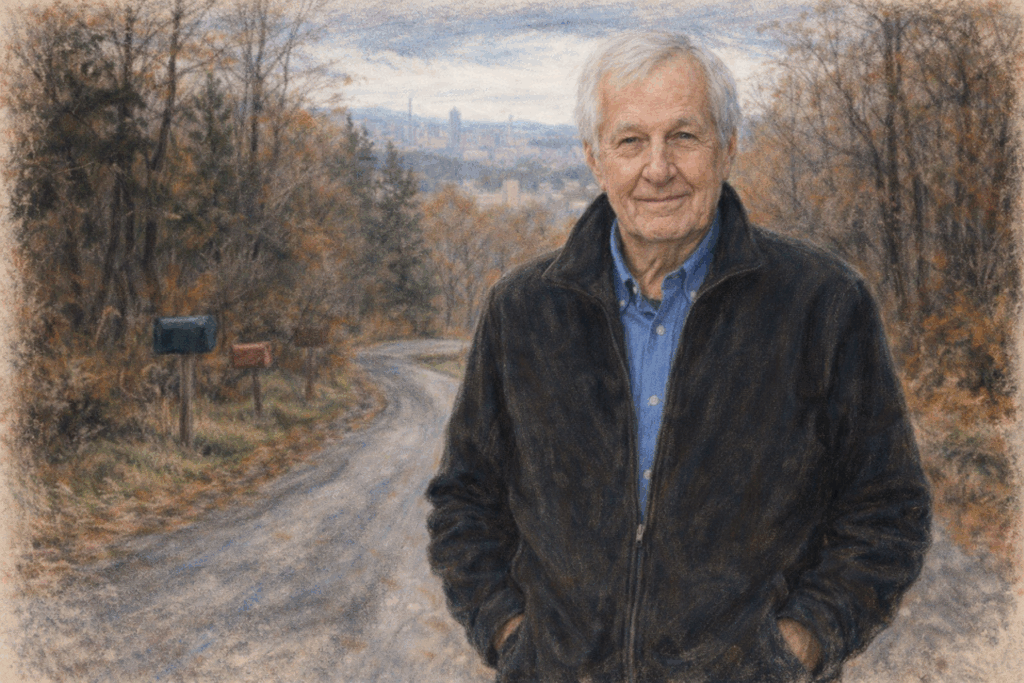
Some losses stop you in your tracks. Mike Stevens’ passing is one of them.
For more than four decades, Stevens was a steady presence across northeastern and central Pennsylvania, a voice that felt familiar even if you’d never met him. He didn’t demand attention or chase spectacle. He simply showed up, week after week, with a camera, a sense of curiosity, and a genuine respect for the people whose stories he told.
When word spread that he had passed, it didn’t feel like the loss of a television personality. It felt like losing someone who had been quietly paying attention to all of us.
Stevens spent more than 40 years at WNEP, traveling the back roads and side streets of the 570, documenting the lives of people doing ordinary things with uncommon care. Even after stepping back from his regular role in 2019, he never truly left. Through PhotoLink segments, short reflections drawn from decades of reporting, he continued opening doors, listening closely, and reminding viewers that the most meaningful stories are often the ones unfolding right in front of us.
He wasn’t a food reporter.
But few people did more, often without intending to, to preserve the food culture of this region.
Food as a Way of Living
Mike Stevens never treated food as content. There were no trends to chase, no rankings to climb, no viral moments to manufacture. Food, in his work, was simply where life happened.
It appeared in church basements where volunteers moved in practiced rhythm, baking pies not for praise but because someone had to. It showed up in butcher shops where hands knew the work so well they barely needed words. It lived in fire halls, farmers’ markets, and kitchens where the coffee was always on and the stories didn’t need polishing.
He understood something many modern storytellers forget: food isn’t the destination. It’s the excuse to gather.
That sensibility sits at the heart of the 570 itself, a region shaped not by spectacle, but by repetition. By showing up. By doing the thing again and again until it becomes tradition.
Before It Was a “Scene”
Long before Old Forge pizza became shorthand for regional identity, Stevens was there, filming inside Antonio’s in 1988. The segment didn’t frame the pizza as a phenomenon. It focused on the work, the hands, the rhythm, the repetition. Pizza wasn’t a brand. It was labor. It was muscle memory. It was pride built one tray at a time.
That distinction matters.
Stevens wasn’t interested in declaring something iconic. He was interested in showing how it came to be.
The same approach shaped his coverage of church kitchens, like St. John’s Lutheran Church, where shoofly pies weren’t quaint relics but expressions of care. Food there wasn’t about indulgence. It was about mutual aid, showing up for one another when resources were limited, but commitment wasn’t.
In those spaces, food became a quiet form of love. A way of saying: you belong here.
Where Culture Is Passed by Hand
In Moosic, Stevens documented the making of Christmas kielbasa, capturing the deeply physical nature of cultural memory. Recipes weren’t written down. They were remembered through motion, through hands that had done the work for decades. Through gestures passed from one generation to the next without ceremony or performance.
It’s the kind of knowledge that doesn’t survive easily in the digital age unless someone is there to witness it.
Stevens was.
He understood that food traditions aren’t preserved through nostalgia. They survive through participation. Through repetition. Through people who keep showing up even when no one is watching.
That same understanding shaped his visit to the Hometown Farmers Market in Schuylkill County. He didn’t focus on prices or product lists. He focused on relationships, the easy familiarity between vendor and customer, the way a market functions less like a business and more like a living ecosystem.
In those moments, food becomes conversation. Memory. Continuity.
“There Are Some Things You Just Have to Go To”
Nowhere is that philosophy clearer than in his visit to the McClure Bean Soup Festival, where Stevens offered a line that now feels like a quiet thesis:
“There are some things in this world you just have to go to.”
It’s a simple sentence. But it holds everything.
You can’t livestream belonging. You can’t algorithm your way into shared memory. You have to be there, in the cold, in the heat, in a line that moves slowly but always forward. You have to taste the soup, smell the air, hear the conversations folding over one another.
That’s where culture lives.
And that’s what Mike Stevens preserved, not just places, but the act of showing up.
A Legacy That Still Feeds Us
Stevens never positioned himself as an authority. He didn’t speak over people or compress their lives into neat narratives. He listened. He let stories unfold at their own pace. In doing so, he gave the 570 a mirror, one that reflected dignity, care, and quiet resilience.
His work reminds us that food isn’t just what’s on the table. It’s who’s around it. It’s the hands that prepared it. It’s the memory that lingers long after the plates are cleared.
At 570andDown, we often talk about food as a doorway into larger stories, about place, people, and identity. That philosophy owes a quiet debt to Mike Stevens, whether we realized it or not. He showed us that the most meaningful stories aren’t always loud or new. Sometimes they’ve been simmering for generations, waiting for someone patient enough to notice.
And now, as we say goodbye, we’re reminded that the places he cherished, the church basements, the fire halls, the bakeries, the markets, still need us to show up.
Because, as Mike Stevens taught us, there are some things in this world you just have to go to.
And when we do, we’re not just preserving tradition. We’re keeping the soul of the 570 alive.
Editor’s Note
At 570andDown, we spend a lot of time writing about food, where it’s made, who makes it, and why it matters. This story exists because Mike Stevens showed us, again and again, that food is never just food. It’s memory. It’s labor. It’s community.
Long before food culture became something to document or define, Mike was already doing the work, quietly, respectfully, and with deep care for the people behind the stories. This piece is our small way of saying thank you, and of honoring a legacy that continues to shape how we see the 570.