The storied Old Forge restaurant has plans to reopen after tragedy closed it nearly a decade ago.
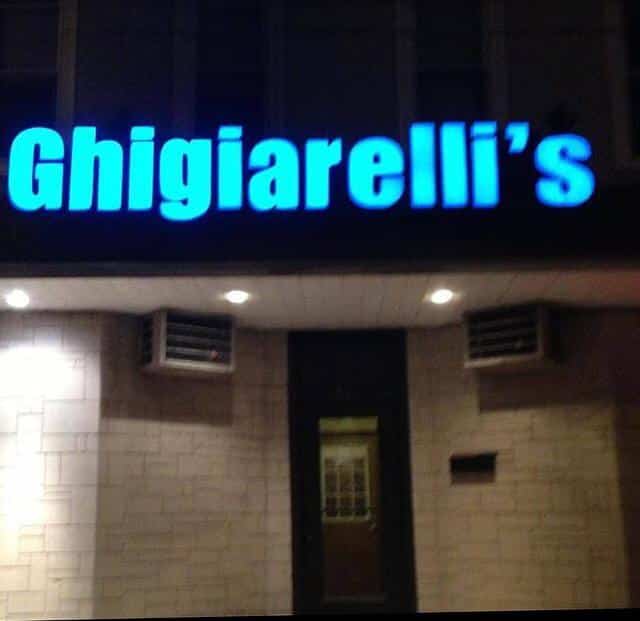
The ovens at Ghigiarelli’s haven’t fired in years, but if you grew up anywhere near Old Forge, chances are you can still conjure the smell: sweet tomato sauce, melted cheese stretching into those familiar square cuts, the hum of a dining room where Friday nights followed a rhythm nobody had to explain. Now, after a long silence, the borough staple has announced plans to reopen, beginning with takeout service first. There’s no confirmed opening date yet and no timeline for dine-in, but even the promise of a return is enough to stir something deeper than simple appetite.
Because in Old Forge, proudly known as the Pizza Capital of the World, pizza isn’t just dinner. It’s inheritance.
The local style is unmistakable: rectangular trays, crisp-edged crust, square slices meant for sharing, and cheese blends that often include American alongside mozzarella for that distinctive creamy pull. Recipes here aren’t trends; they’re heirlooms. Many trace back to Italian immigrant families who settled in the coal region decades ago, bringing culinary traditions that gradually evolved into something uniquely Northeastern Pennsylvania.
Ghigiarelli’s has long been part of that lineage. The restaurant has been operated by members of the Casella and Baron families since 1961, and local pizza historians often cite it among the foundational names that helped define Old Forge’s identity as a pizza town. For generations, it wasn’t just somewhere to eat, it was where birthdays were marked, Little League wins celebrated, and relatives visiting from out of town were inevitably taken “for a tray.”
The menu reflected that same continuity. Pizza was always the headliner, but regulars also came for the antipasto, pasta dishes, soffritto, tripe, the kind of cooking that feels less like restaurant fare and more like a family kitchen scaled up just enough to accommodate a neighborhood.
Its sudden closure in 2017 followed the killing of owner Robert Baron, a tragedy that shook the region and cast a long shadow over a beloved gathering place. Years passed before an arrest in 2023, and a conviction in 2024 brought legal closure to the case. But culturally, the restaurant remained suspended in memory, a place people talked about in the past tense even while quietly hoping it might someday return.
And they did talk about it. Constantly. Old Forge pizza loyalty runs deep, but Ghigiarelli’s seemed to occupy a particular emotional space. Former residents reminisced online about post-game stops and Friday night takeout traditions. Families recalled introducing kids, now adults, to their first tray there. Even other local pizzerias acknowledged the loss, a reminder that while rivalry exists in Old Forge, so does a shared understanding that every long-standing shop contributes to the borough’s identity.
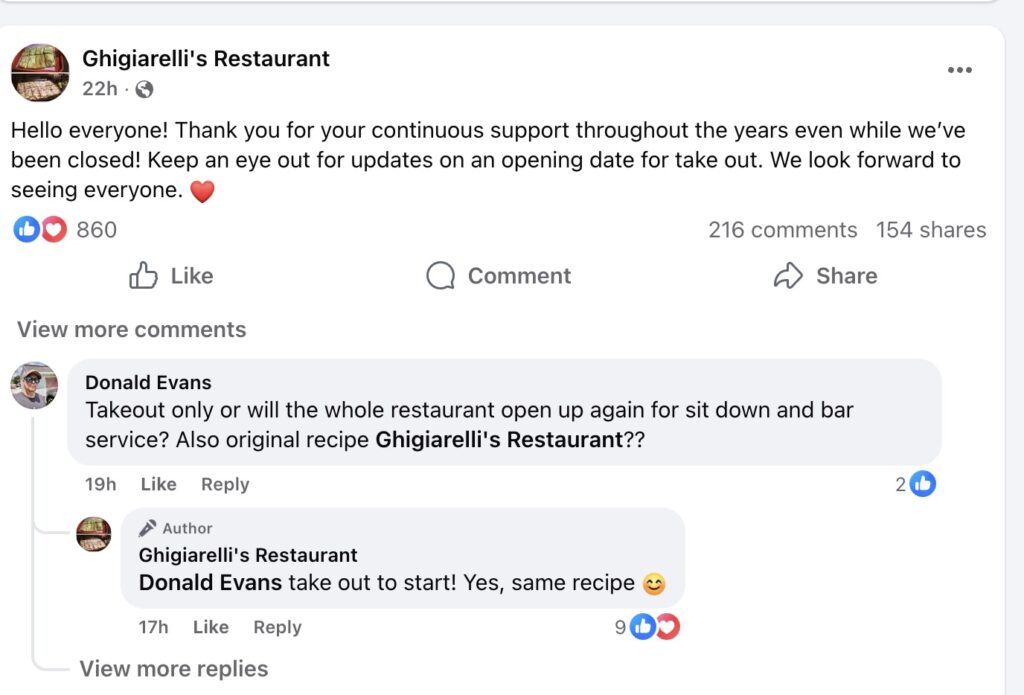
The restaurant’s recent social media update suggests the reopening will start modestly with takeout service, and in a reply to customer questions, the restaurant indicated the original recipe will remain unchanged. That detail matters more than outsiders might realize. In Old Forge, consistency isn’t just culinary preference; it’s emotional reassurance. People want the tray they remember, the one tied to specific moments and familiar rituals.
That longing speaks to something larger about small-town restaurants. Places like Ghigiarelli’s serve as unofficial community centers. They absorb celebrations, comfort gatherings after funerals, weeknight dinners when nobody feels like cooking, quick stops before high school games. When they disappear suddenly, it’s not just a business closing, it’s a disruption in the social fabric.
Old Forge has never lacked good pizza, of course. The borough remains dense with pizzerias, each fiercely defended by its loyalists. But the return of a longtime player doesn’t dilute that scene; it reinforces it. A thriving cluster of historic pizzerias is precisely what keeps Old Forge’s reputation alive as a destination for pizza pilgrims from across the region.
For now, operational details remain limited. Takeout first. No confirmed opening date. No clear dine-in timeline. Those practical questions will matter eventually, but they almost feel secondary to the symbolic one: that the ovens will be lit again at all.
And when they are, the moment probably won’t feel flashy or dramatic. It will feel familiar. Someone will place the same order they always did. Someone else will remark that it tastes exactly as they remembered. The scent of baking trays will drift out onto Main Street again, and for a lot of people, that simple sensory cue will carry decades of memory with it.
Restaurants rarely get second chapters, especially after closures tied to tragedy. But when they do, particularly in towns where food traditions double as cultural identity, the reopening becomes something more than commerce. It becomes continuity.
Which, in Old Forge, might be the most comforting ingredient of all.