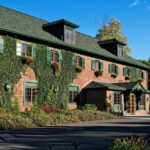
The upscale destination restaurant transforms its wine cellar dining room into a beef-centric experience for one week…
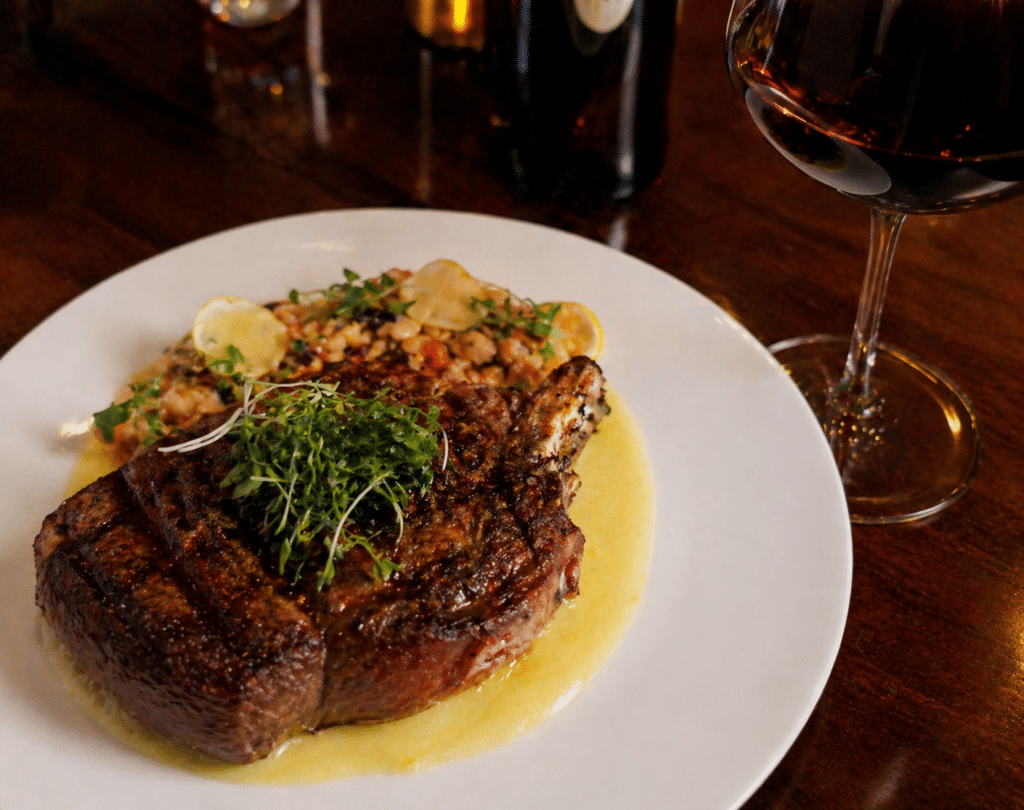
For one week this May, The Beaumont Inn is narrowing its focus in a way that makes perfect sense.
From May 12 through May 17, the longtime Dallas property’s downstairs wine room becomes “Steakhouse & Cellar,” a limited-run steak and wine experience that turns one of Back Mountain’s best-known dining destinations into something more concentrated: a temporary steakhouse built on premium cuts, classic sides, and the kind of practical indulgence that rarely goes out of style.
The Beaumont is no stranger to switching up its menu for special events. For proof of that, just look back at the wild game dinner it hosted a few months ago.
For decades, the property along Route 309 has occupied a distinct place in the local dining scene; part inn, part event venue, part polished dinner destination. Since Robert Friedman purchased and renovated the historic property in 2013, The Beaumont has expanded that identity, pairing its gardens, patios, and hospitality infrastructure with a broader culinary ambition that stretches beyond weddings and special occasions.
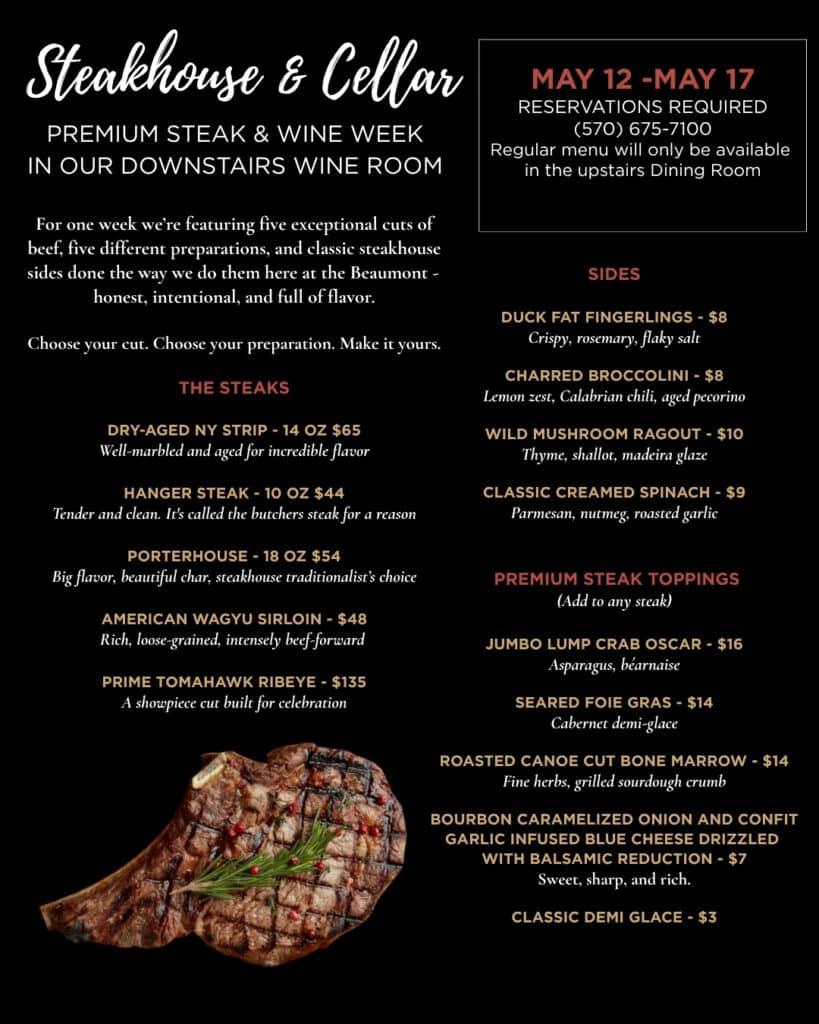
Steakhouse & Cellar fits neatly into that evolution.
The menu is straightforward in structure and smart in execution. Diners can choose from a 14-ounce dry-aged New York strip, a 10-ounce hanger steak, an 18-ounce porterhouse, American Wagyu sirloin, or the showpiece: a prime tomahawk ribeye built for celebration as much as appetite.
The appeal here is that Beaumont understands steakhouse dining doesn’t require reinvention. It requires quality, restraint, and enough flexibility to let diners build the evening they actually want.
Sides avoid filler. Duck fat fingerlings are crisp and obvious in the best possible way. Charred broccolini with lemon zest, Calabrian chili, and aged pecorino offers brightness and edge. Wild mushroom ragout adds earthiness. Creamed spinach remains on the menu because there was never a compelling reason to remove it.
And for anyone inclined to push dinner into full special-occasion mode, additions like jumbo lump crab Oscar, seared foie gras, and roasted bone marrow make it easy.
What elevates this beyond a simple menu refresh is the setting. By staging the event in its downstairs cellar space while maintaining the regular Spring Menu upstairs, Beaumont creates a distinct experience rather than simply adding steak specials. The downstairs wine room matters, not just for atmosphere, but because The Beaumont has spent years building a wine program substantial enough to justify it, with a deep list that moves from accessible pours to serious bottles, reinforcing that this event is as much about pairing as it is about protein.
That broader attention to detail reflects something more important about The Beaumont itself. This is a property with history, dating back decades in Back Mountain, that has increasingly chosen to evolve through thoughtful programming rather than nostalgia alone. Its regular menu already balances steakhouse comforts with broader upscale ambitions, from elk loin to branzino to Wagyu Bolognese. Specialty events like the Wild Game Dinner proved the restaurant could stretch; Steakhouse & Cellar suggests it also understands when refinement, rather than experimentation, is the smarter move.
And that may ultimately be what gives this event weight.
In a regional dining landscape where many established venues either cling too tightly to familiarity or chase reinvention for its own sake, The Beaumont appears to be doing something more difficult: preserving its identity while sharpening it. Steakhouse & Cellar is not important because it offers tomahawks or foie gras; plenty of places can sell luxury. It matters because it signals that one of Back Mountain’s longstanding institutions still understands how to create relevance, using its cellar, kitchen, and wine list not to imitate a big-city steakhouse, but to deliver a version that makes sense here.
For six nights, that means more than dinner downstairs. It’s a reminder that longevity in the 570 dining scene means very little unless a restaurant continues giving people new reasons to care.