This Bloomsburg, PA restaurant is punching well above its weight…

There are restaurants that talk about farm-to-table, and then there are the rare few that actually cook that way because they have a farm. The Blind Pig Kitchen in Bloomsburg belongs firmly to the latter camp. It’s a small, two-night-a-week BYOB tasting room that doesn’t pander, posture, or over-explain. Instead, it simply cooks, cleanly, seasonally, and with ingredients that were often still in the soil or the greenhouse mere hours before service.
If NEPA has a tasting-menu culture, this is one of its most honest expressions.
The restaurant, run by the husband-and-wife team of Chef Toby Diltz and Sarah Walzer, operates on a remarkably simple premise: grow what you can, source the rest from people who farm the way you farm, and build a five-course dinner every two weeks that reflects what the season is capable of. The six-acre homestead behind it, just outside Benton, is more than a romantic detail. It’s the backbone. Berries, vegetables, mushrooms, eggs, meat birds, turkeys, heritage hogs, honey bees, an orchard with more than a hundred fruit trees and berry bushes: the menu is an extension of this landscape, not a marketing abstraction.
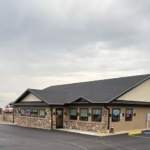
And the dining room on Iron Street? About forty seats. One seating at 6 p.m. Everyone eating the same thing.
If that sounds austere, it isn’t. The Blind Pig’s food is warm, flavorful, and satisfying in the way that only ingredient-driven cooking can be. The structure rarely changes: a bite, a warm course, a salad or pasta, a protein, and a dessert, but the specifics shift with the weather. In July, that might mean smoked eggplant on crostini, tomatoes at their peak, and beef bulgogi that feels both worldly and unmistakably Pennsylvanian. By September, the room starts to smell like celeriac and early apples. In November, duck arrives with port reduction. By December, black walnuts and cranberries often make their way onto the menu, as natural to the season as short daylight and cold mornings.
This is what eating in NEPA actually looks like when a kitchen is willing to follow the map of its micro-seasons.
About the food…
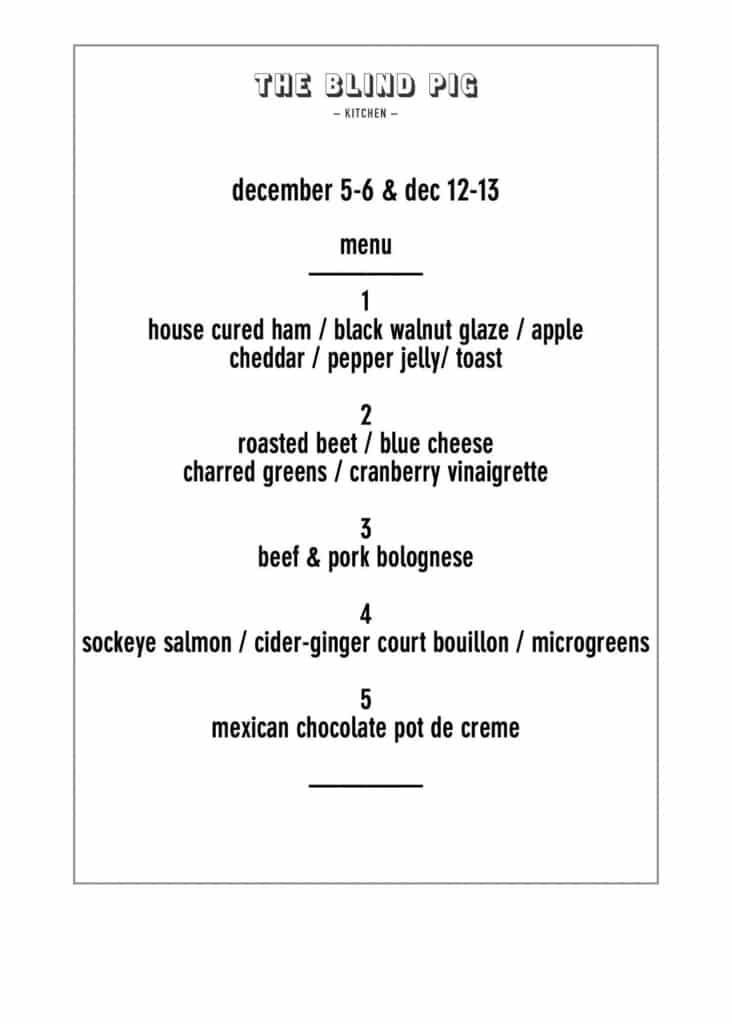
What’s remarkable isn’t that Blind Pig serves a tasting menu, it’s how they do it. Tasting menus often rely on maximalism: tweezers, gels, architectural plating. Blind Pig cooks the way good farmers cook: with restraint, intuition, and respect for the ingredients. A dish might list just five or six things: butternut squash, garlic, cavatelli, chestnut, a cider reduction, and each element is doing its job. There’s no wasted motion here, no cleverness for its own sake. The cooking reads as confident and mature, but never showy.
Desserts follow the same throughline of clarity. A pear clafoutis in late summer. Brown sugar–espresso panna cotta as the cold sets in. Pawpaw ice cream, a rarity even in Pennsylvania, paired with an apple-pear crisp. These dishes aren’t engineered to stun; they’re designed to feel right.
The BYOB format reinforces the simplicity. There’s no attempt at a bar program. Diners bring their own bottle, maybe a dry cider from down the road, maybe a Nebbiolo someone has been saving, and pair it with a menu they may have only glimpsed a day or two before. It makes the experience collaborative, almost ritualistic.
Quietly leading the way…
Within the 570 dining landscape, Blind Pig sits in a small but growing circle of restaurants, Old Tioga Farm, Bank + Vine, Alter House, that treat seasonal cooking as a responsibility rather than a trend. But Blind Pig is arguably the purest farm-to-table operation among them. Very few restaurants anywhere, let alone in Bloomsburg, can credibly say that the distance between farm and plate is measured in footsteps rather than miles.
If you want a meal that captures what northeastern Pennsylvania tastes like, not in theory or branding, but in practice, it’s here. Five courses, two nights a week, at a table where the story of the region arrives one plate at a time.
And it’s hard to imagine a more honest definition of “local food” than that.