The upscale eatery just debuted its new seasonal menu, and there’s a lot to like about it…
Every restaurant wants you to know it’s serving summer. The tomatoes arrive. Burrata comes out of hiding. Somebody grills a peach. Seasonal menus appear with dependable regularity, each promising sunshine on a plate.
A’tera 519’s new summer menu feels different. It doesn’t chase the season so much as settle into it. This isn’t a kitchen checking boxes. It’s one that seems genuinely excited about what the next few months have to offer.
In barely a year, A’tera has collected the kind of accolades most restaurants spend a decade chasing. The downtown Scranton restaurant earned AAA Four Diamond status, took home PRLA’s Newcomer of the Year honors, and has built a reputation for ambitious dinners, thoughtful wine programming, and the sort of special events that ask diners to step outside their comfort zones rather than settle into them.
Awards are one thing. The harder part is continuing to give people a reason to come back. This menu does exactly that.
From the day A’tera opened on Linden Street, it wasn’t trying to blend into Scranton’s restaurant scene. It was trying to raise the ceiling. The dining room has always suggested confidence, but this latest menu feels like the clearest expression yet of what the restaurant wants to be: contemporary coastal American cooking viewed through a Mediterranean and French lens, rooted in seasonal ingredients instead of culinary gymnastics.
The opening pages set the tone immediately.
The burrata isn’t simply another creamy cheese surrounded by vegetables. English peas, mint, grilled onion, lemon zest, pea purée, and pistachio gremolata build layers of sweetness, brightness, smoke, and texture that keep every bite moving. It understands the difference between richness and heaviness.
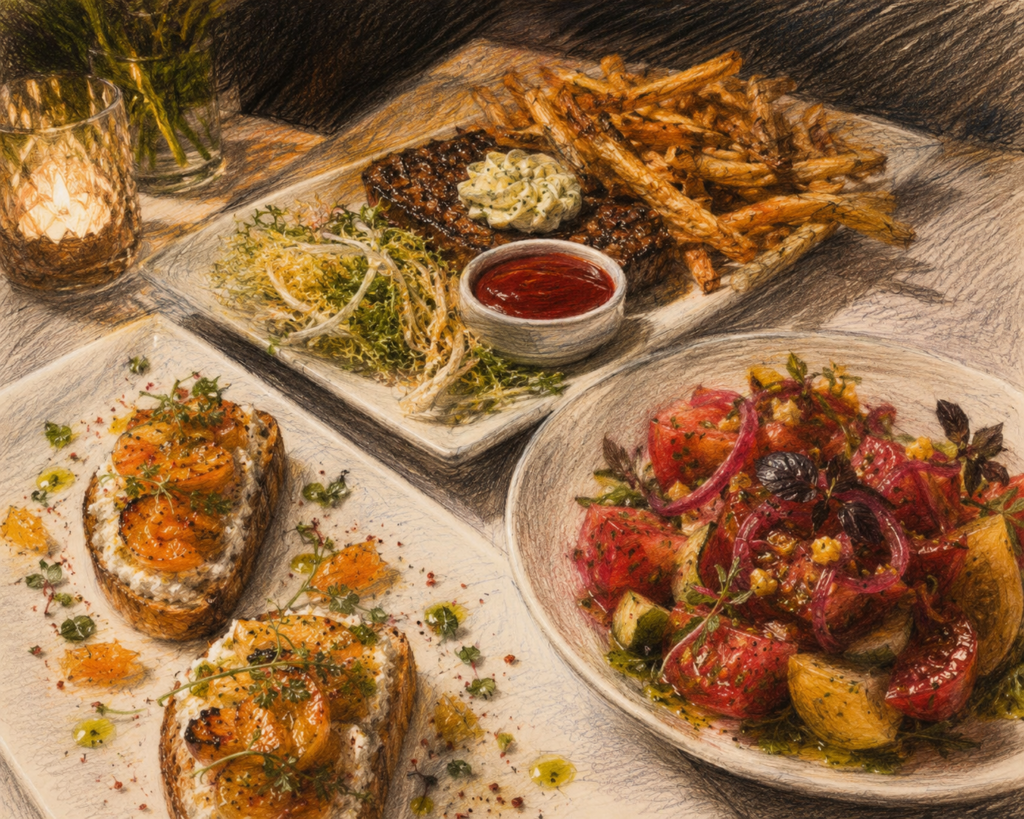
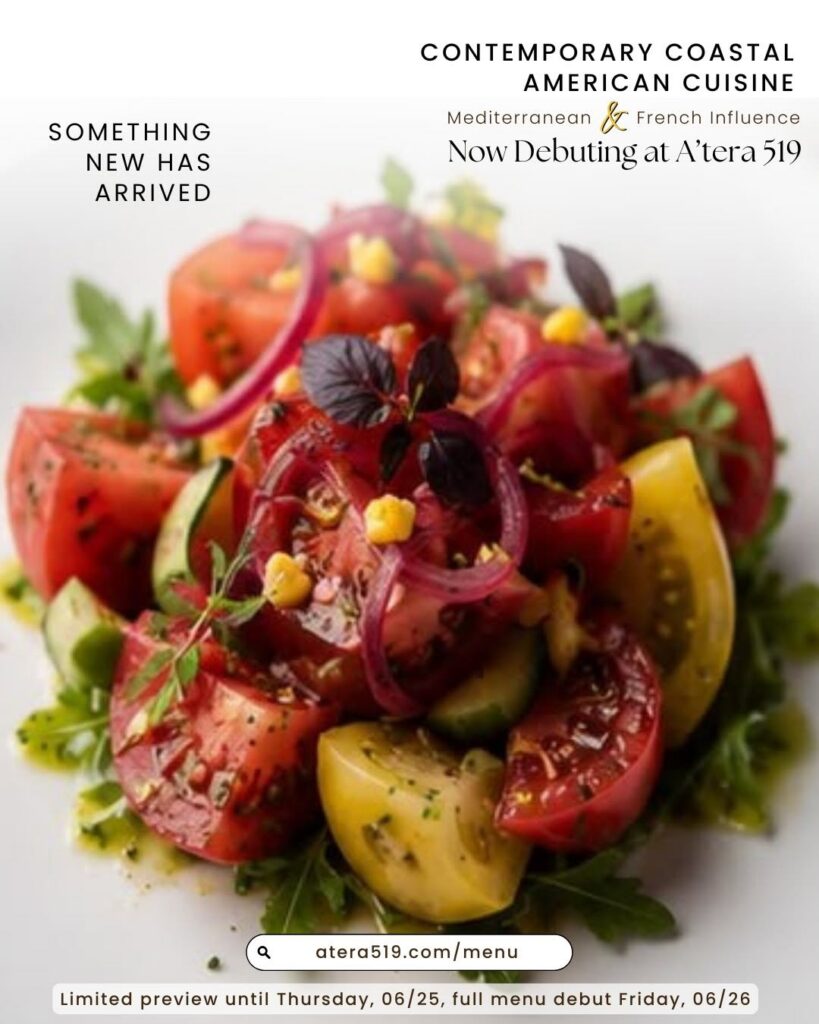
Then comes the heirloom tomato salad. Tomatoes, cucumbers, pickled onions, burnt corn, and opal basil sound almost inevitable this time of year, but the burnt corn changes the conversation. It gives the plate just enough char and depth to keep it from drifting into farmers market predictability.
The apricot tartine may be the menu’s quiet standout. Whipped ricotta, honeycomb, Calabrian chili, and thyme piled onto grilled sourdough create the kind of balance that makes sharing feel like a mistake. Sweet gives way to heat. Creaminess meets crunch. Every ingredient earns its place.
From there, the menu turns decisively toward the water.
The jumbo lump crab cake arrives with harissa aioli, preserved citrus, and frisée. Yellowfin tuna crudo pairs yuzu kosho with avocado, cucumber, cilantro oil, and crispy shallots. Grilled octopus lands alongside fingerling potatoes, romesco vinaigrette, chive oil, and Espelette pepper. None of these combinations feels fashionable for fashion’s sake. They’re built around acidity, texture, and restraint, allowing excellent seafood to remain the point.
Even the vegetable dishes refuse to be afterthoughts. Patatas bravas with mojo picón. Shishito peppers finished simply with olive oil, sea salt, and lemon zest. Roasted cauliflower paired with kale, pomegranate, and chermoula aioli. Even if you never made it beyond this section of the menu, you’d still have a clear picture of what this kitchen is trying to accomplish.
The pastas shift the mood without abandoning it.
Hand-rolled ricotta gnocchi folded into truffle fonduta and Parmigiano Reggiano lean unapologetically toward comfort. Pappardelle Bolognese, enriched with braised beef and porcini, delivers the sort of slow-building depth that reminds you why classics become classics. Then the green risotto pulls everything back toward the season, layering peas, asparagus, fava beans, mint, lemon zest, and pecorino into one of the menu’s clearest celebrations of summer.
The entrées broaden the conversation even further.
Potato-crusted halibut with artichoke, pancetta broth, blood orange aioli, and chive oil balances crispness with richness. Whole branzino, served with charred lemon, fennel, olive oil, and crispy capers, lets simplicity do the heavy lifting. Elsewhere, salmon arrives over lentils with lemon beurre blanc, lamb is paired with pomegranate molasses demi-glace, duck with smoked cherry glacé, and the flat iron steak comes finished with bone marrow butter and house frites.
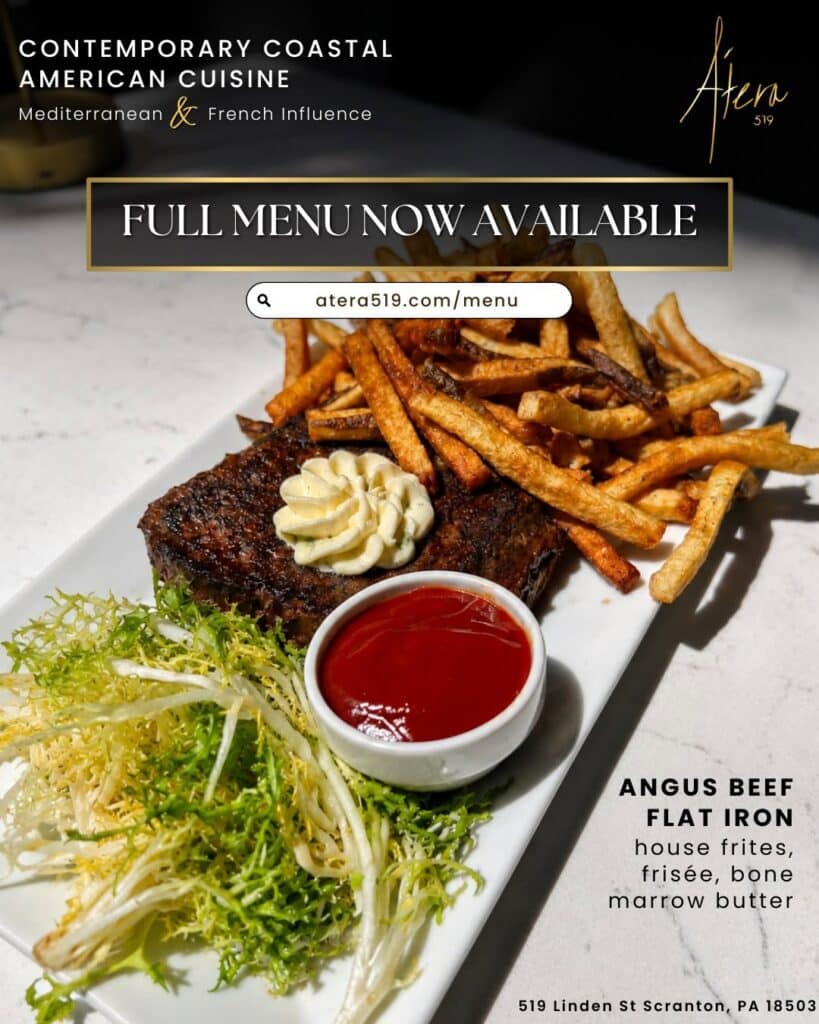
Bone marrow butter isn’t subtle.
Good. Not everything worth eating should be.
What makes this menu feel important isn’t that every dish sounds impressive. Plenty of menus do that. What separates A’tera is that the dishes all seem to belong to the same conversation. The produce, seafood, handmade pastas, and carefully layered sauces all reinforce a clear identity instead of competing for attention.
That matters because A’tera has quickly become one of the restaurants people point to when they argue that Scranton’s dining scene is capable of something more ambitious. Its Catalan wine dinner, Caviar Week programming, and national recognition have already helped establish that reputation. This menu reinforces it in the simplest way possible: by giving diners another reason to pull up a chair.
This isn’t a restaurant reinventing itself. It’s a restaurant settling comfortably into its own skin. And judging by this summer menu, that suits A’tera just fine.